
Cannabinoids
Cannabinoids are a diverse class of chemical compounds that act on cannabinoid receptors in the body's endocannabinoid system.

"This is my Lady Brenda. She loves to meet new people and we have many amazing adventures together."
Types of Cannabinoids
-
Phytocannabinoids: Natural compounds produced by the cannabis plant, with over 100 identified.
-
Endocannabinoids: Internal signaling molecules naturally produced by the human body (such as anandamide).
-
Synthetic Cannabinoids: Man-made lab compounds designed to mimic or alter natural cannabinoid structures
How They Work
Cannabinoids bind to CB1 and CB2 receptors located across the central nervous system, brain, and nearly every organ. This endocannabinoid system helps regulate fundamental functions like mood, sleep, appetite, and immune response.
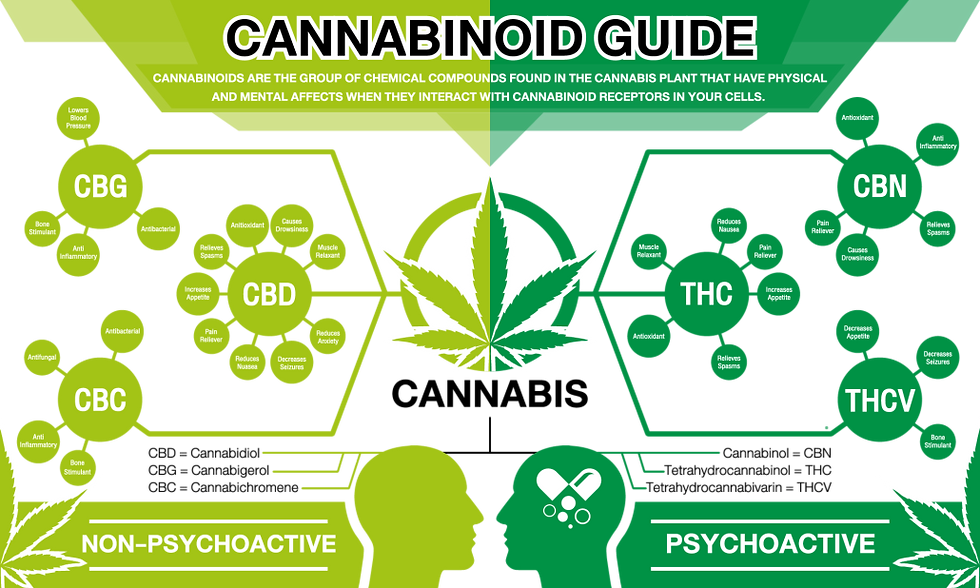
The four main cannabinoids commonly highlighted in cannabis research and product labeling are THC, CBD, CBG, and CBN.
1. THC (Delta-9-Tetrahydrocannabinol)
-
Primary effect: Psychoactive (creates the "high" or euphoric feeling).
-
Key uses: Pain relief, reducing nausea, and stimulating appetite.
-
How it works: Binds directly to CB1 receptors in the brain.
www.hdrop.com +3
2. CBD (Cannabidiol)
-
Primary effect: Non-psychoactive (does not cause a high).
-
Key uses: Managing anxiety, easing inflammation, and reducing certain types of seizures.
-
How it works
: Interacts indirectly with the body's receptors and can lessen the intoxicating effects of THC.
3. CBG (Cannabigerol)
-
Primary effect: Non-intoxicating, often called the "mother cannabinoid" because other cannabinoids are synthesized from its acidic form (CBGA).
-
Key uses: Supporting focus, antibacterial properties, and managing inflammation.
-
How it works: Binds directly to both CB1 and CB2 receptors in low concentrations.
YouTube·MarijuanaAware Patient Education +3
4. CBN (Cannabinol)
-
Primary effect: Mildly psychoactive or sedating; formed when THC breaks down and oxidizes over time.
-
Key uses: Often used as a sleep aid and for nighttime relaxation.
-
How it works: Interacts weakly with receptors to promote drowsiness.
Follow the Links below for Further Enlightenment